

The Kempner’s 3rd Annual Spring into Science Event Highlights New Research on Intelligence
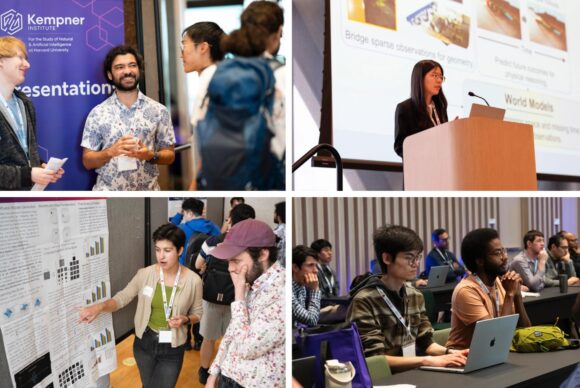
The Kempner Institute community gathered for its annual Spring into Science event to share research, seed new ideas, and celebrate the new work coming out of the institute.
Photo: Anna Olivella
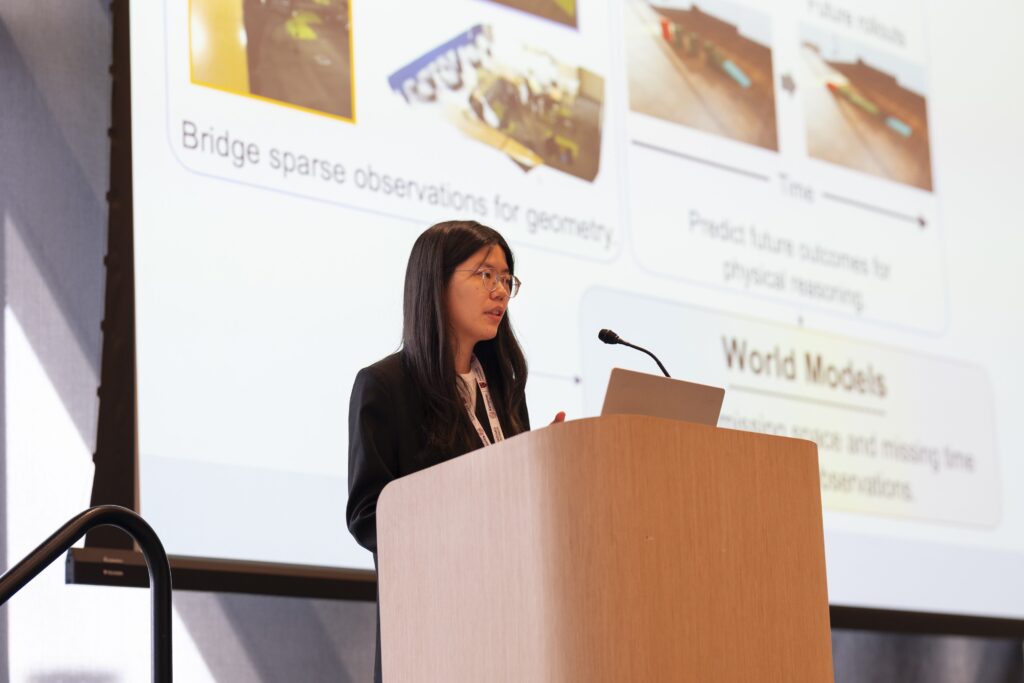
Photo: Anna Olivella
Cambridge, MA — On May 21, researchers, students, fellows, and faculty from across the Kempner Institute community gathered at Harvard’s David Rubenstein Treehouse in Allston for the institute’s third annual Spring into Science event, a day-long celebration of emerging research spanning neuroscience, artificial intelligence, engineering, and related fields.
The event offered the Kempner community an opportunity to connect, seed new research ideas and collaborations, and celebrate the institute’s growth.
Featuring nine talks and 59 posters, as well as focused discussion groups, the event reflected the institute’s cross-disciplinary approach and its newest research across natural and artificial intelligence, from neuronal computation to advanced AI architectures.
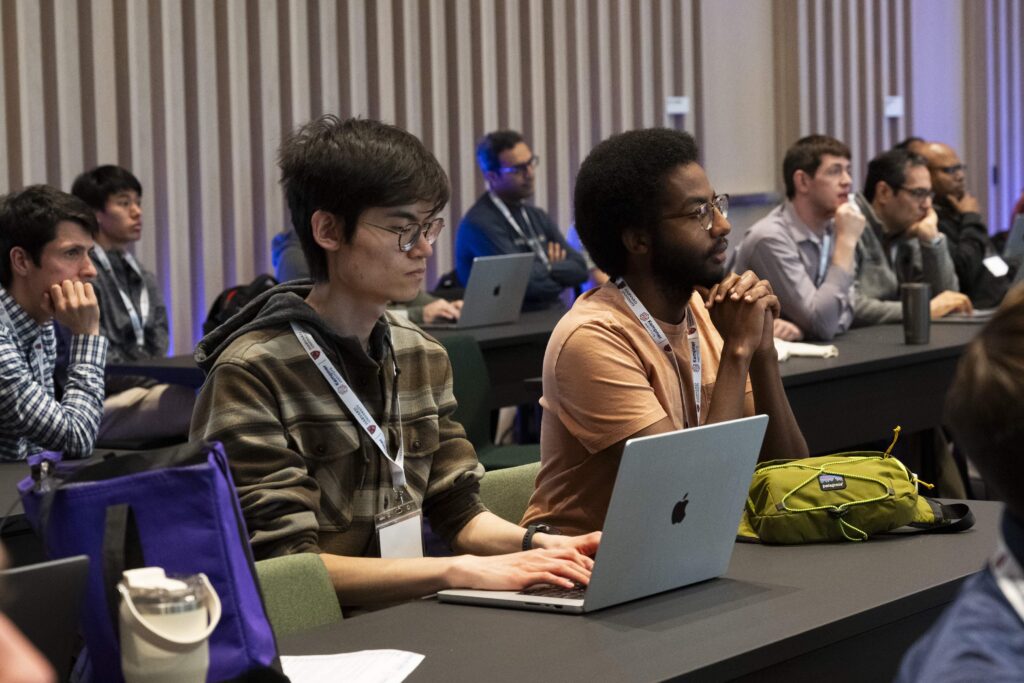
“What I appreciated about Spring into Science was that it felt low-pressure but highly focused,” said Pranav Misra, a postdoctoral fellow working in the lab of Kempner associate faculty member Haim Sompolinksy. “It created space for a mix of emerging tools, classical approaches, and data-inspired algorithms.”
In many ways, Spring into Science 2026 represented a microcosm of the Kempner Institute itself: bringing together researchers across disciplines to investigate intelligence from multiple perspectives while building a collaborative scientific community.
“A lot of ongoing work was presented with an eye toward building collaborations and connections, rather than simply presenting finished results,” said Satpreet Singh, a postdoctoral fellow in the lab of Kempner Institute Investigator Kanaka Rajan.
Research Highlights
Several morning talks focused on the biological foundations of intelligence. Ella Batty presented some of the first results from the Big Little Brain project, which involves developing part of a virtual mouse brain using the institute’s new brain-modeling platform. Houman Safaai’s presentation explored the computations performed by the dendrites of neurons and how these computations can enhance AI models. In research focused on social groups rather than individual brains, Sonja Johnson-Yu and Satpreet Singh showed how their “virtual laboratory” approach could provide insights into social intelligence in groups of weakly electric fish.
The morning also offered presentations on theoretical approaches to natural intelligence. William Dorrell’s presentation offered a theoretical lens on intelligence: he showed how his “efficient computing theory” could be used to characterize representations in the prefrontal cortex of the brain.
Shuze Liu’s talk presented empirical evidence informing a fundamental topic in cognitive science: how humans represent and solve complex problems, especially when it is hard to know what problem features are relevant in the first place.
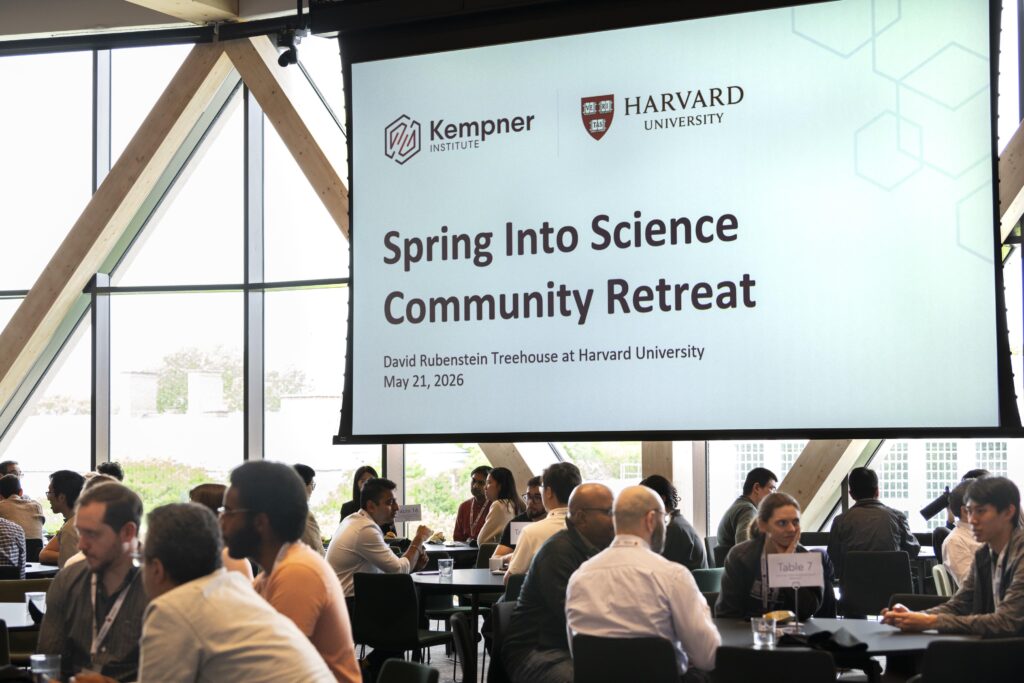
During lunch, attendees gathered around 18 roundtables organized around topics ranging from human-computer interaction to the use of AI to automate scientific research.
The afternoon sessions shifted from research on natural intelligence toward advances in artificial intelligence and machine learning. Gabriel Poesia Reis e Silva presented work using AI systems to generate formally verified computer programs at scale, with a goal of eventually enhancing datasets for AI coding assistants. Ruojin Cai discussed research on 3D world models that could enable AI systems and robots to better understand physical environments and spatial relationships between objects.
Other talks examined the fundamental assumptions embedded within machine learning systems and how those assumptions shape AI capabilities. Nikhil Anand explored inductive biases in generative models, while Jaeyeon Kim demonstrated methods for transforming masked-diffusion models to produce more flexible “any-order” intelligence.
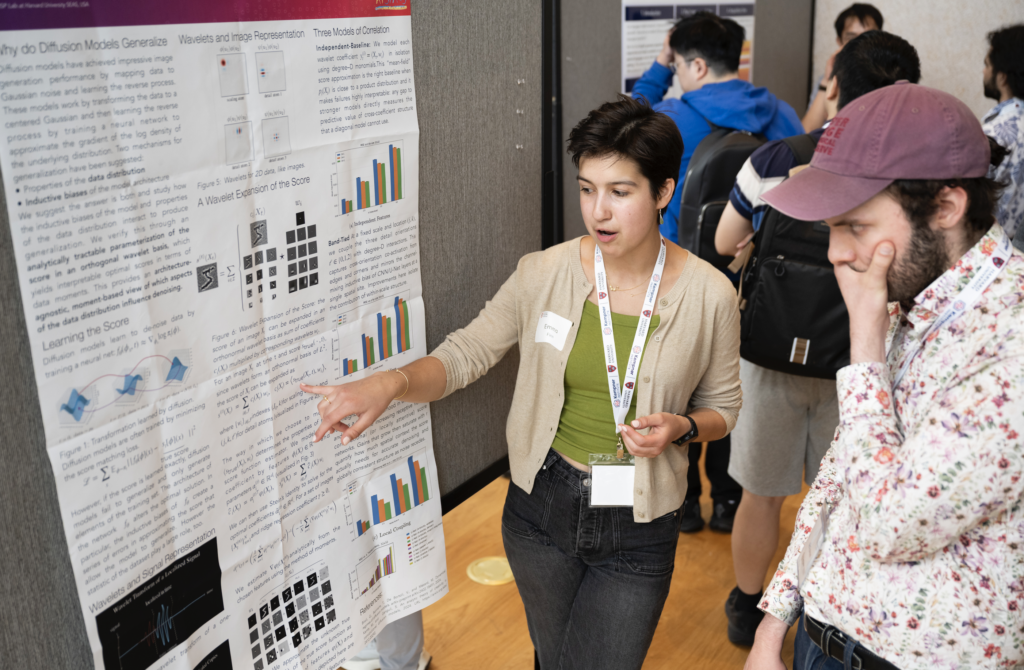
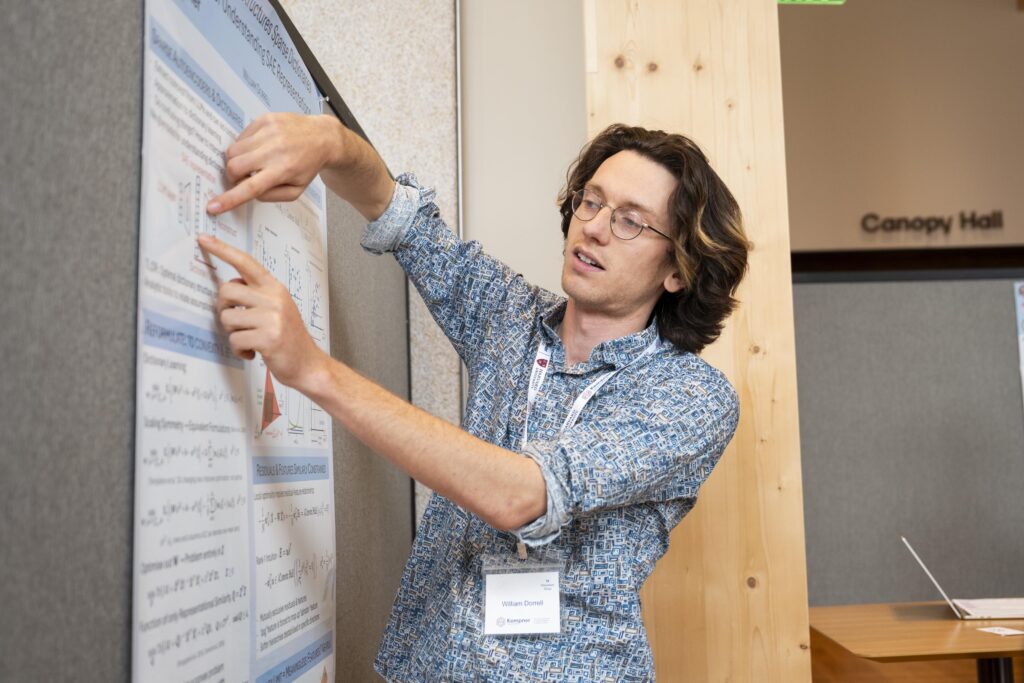
The event concluded with two back-to-back poster sessions in the Treehouse atrium, where poster presenters discussed projects ranging from the study of whale behavior to the use of AI for medicine.
For a full list of presentations, posters and discussion topics, click here.