


Kempner Institute Announces Recipients of 2026 Graduate Fellowships
Sixteen students awarded fellowships to undertake graduate work advancing the study of intelligence in natural and artificial systems
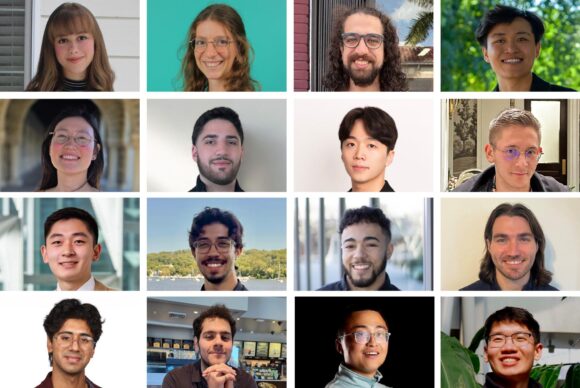
This year’s fellowship recipients include nine incoming and seven continuing graduate students enrolled across six Harvard graduate programs.
Cambridge, MA — The Kempner Institute for the Study of Natural and Artificial Intelligence today announced the names of 16 students chosen as the incoming 2026 cohort of Kempner graduate fellows.
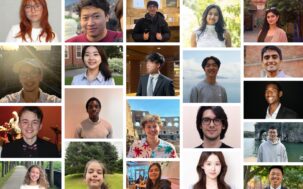
The 2026 recipients of the Kempner graduate fellowship are: Victoria Alkin, Valerie Costa, Alireza Abolghasemi Dehaqani, Ha Dong, Hannah Park-Kaufmann, Hadi Khalaf, Jaeyeon Kim, Artem Kirsanov, Mujin Kwun, Abdul-Malik Zekri, Maceo Richards, Daniel Ritter, Amish Sethi, Mahdiyar Shahbazi, Shiyi Wang, and Andrew Xie.
“We are excited to welcome our newest Graduate Fellows into the Kempner community. As they pursue research on some of today’s most consequential challenges in the field of intelligence, they will help advance and enrich our collective work. We look forward to the insights and discoveries they will bring.”
Denise Yoon, Associate Director for Educational Programs at the Kempner Institute.
This year’s fellowship recipients include nine incoming and seven continuing graduate students enrolled across six Harvard graduate programs, and will bring the institute’s total roster of graduate fellows to 63.
The Kempner graduate fellowship supports Ph.D. students in a wide variety of departments and labs across the University, all pursuing research that aligns with the Kempner’s core mission to advance the study of natural and artificial intelligence. This year’s fellowship recipients are pursuing doctorates in the fields of Applied Mathematics, Biological and Biomedical Sciences, Computer Science, Mathematics, Organismic and Evolutionary Biology, and Neuroscience.
Kempner graduate fellows receive mentorship, access to the Kempner’s computing resources and facilities, and funding up to and including the 4th year of graduate school.
Meet the 2026 Kempner Graduate Fellows

Victoria Alkin, Ph.D. Student, Biological and Biomedical Sciences
“My research aims to develop and apply single-cell human brain transcriptomic aging clocks and other machine learning models to compare brain aging drivers across human brain cell types and regions, investigate how disease, immune factors, and perturbations alter brain aging trajectories, and evaluate the translational relevance of candidate therapeutics.”
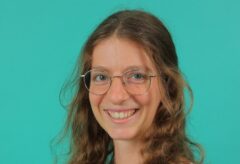
Valerie Costa, Incoming Ph.D. Student, Applied Mathematics
“The brain and AI share a common challenge: understanding what happens inside the black box. My research focuses on developing principled methods and models that make artificial and natural intelligence more interpretable.”
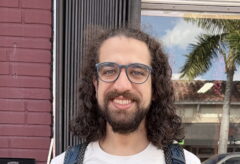
Alireza Abolghasemi Dehaqani, Ph.D. Student, Program in Neuroscience
“I use brain–computer interfaces to understand how the brain achieves flexible computation. I am especially interested in how these principles can inspire AI systems that rapidly and stably reconfigure their computations.”
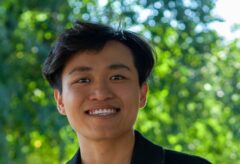
Ha Dong, Incoming Ph.D. Student, Program in Neuroscience
“My research asks how the structure and dynamics of the nervous system scaffold rapid learning, and how these biological principles can help design efficient learning algorithms for artificial intelligence.”
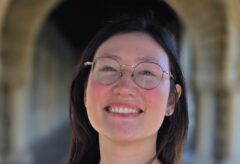
Hannah Park-Kaufmann, Incoming Ph.D. Student, Applied Mathematics
“I aim to understand “mastery” — in both expert human performance and artificial systems — as an embodied, cognitive, and computational phenomenon. I am particularly interested in mastery of tasks that combine physiologically complex motor skill with (embodied) imaginative creativity.”
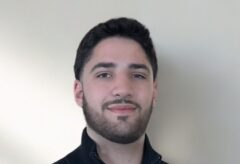
Hadi Khalaf, Ph.D. Student, Computer Science
“My work develops the theoretical and applied foundations for designing reliable AI systems from weak supervision.”

Jaeyeon Kim, Ph.D. Student, Computer Science
“At Harvard, my research focuses on advancing our understanding of modern generative models and developing new generative modeling approaches for scientific and real-world applications.”
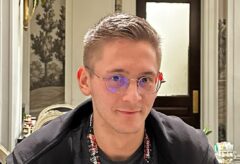
Artem Kirsanov, Ph.D. Student, Program in Neuroscience
“I’m interested in how recurrent neural networks implement computations for efficiently interacting with the physical world. My research draws on tools from geometry and dynamical systems theory to study the relationship between neural representations and sensorimotor behavior of embodied agents.”
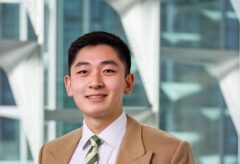
Mujin Kwun, Incoming Ph.D. Student, Computer Science
“My research focuses on scalable methods for training and deploying large language models. I’m particularly interested in reinforcement learning and optimization methods to improve data and compute efficiency as well as quantization methods to make deployment cheaper and faster.”
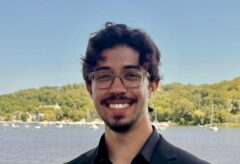
Abdul-Malik Zekri, Incoming Ph.D. Student, Program in Neuroscience
“I am interested in the circuit mechanisms linking neural structure, dynamics, and computation, as well as how biological circuit organization shapes neural activity and behaviorally relevant representations that support flexible decision-making.”
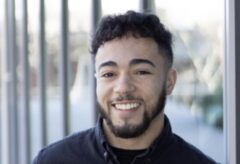
Maceo Richards, Incoming Ph.D. Student, Program in Neuroscience
“I am motivated to examine how structural morphology in different cell types shapes both representational geometry and credit assignment in neural circuits.”
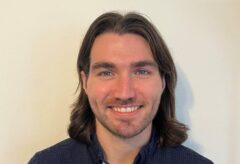
Daniel Ritter, Incoming Ph.D. Student, Computer Science
“I’m interested in developing sample-efficient reinforcement learning algorithms, primarily for post-training large generative models. Sampling from large models is costly, so finding more efficient ways to use data we’ve already generated both makes current post-training applications faster, and opens up new applications in domains with limited data.”
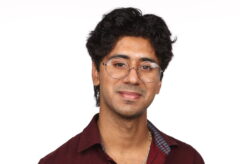
Amish Sethi, Incoming Ph.D. Student, Computer Science
“My research focuses on building reliable embodied AI systems that use structured and compositional representations to understand, predict, and act in the physical world. During my Ph.D., I hope to study world models, hierarchical robot learning, and large-scale embodied foundation models that can perceive, imagine, plan, and adapt robustly across tasks and environments.”

Mahdiyar Shahbazi, Ph.D. Student, Organismic and Evolutionary Biology
“My research focuses on understanding the computations underlying flexible motor control through the study of artificial and biological neural network models.”
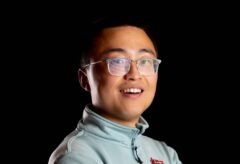
Shiyi Wang, Ph.D. Student, Mathematics
“I am interested in new methods in diffusion models and new biology and physics that diffusion models can unlock.”
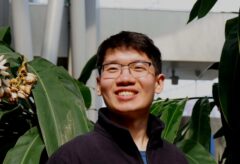
Andrew Xie, Incoming Ph.D. Student, Computer Science
“My research focuses on building intelligence systems that actively sense and reason about the complex and ever-changing physical world. I am interested in adaptive, multimodal sensing models for robust perception and action in dynamic environments.”
About the Kempner Institute
The Kempner Institute seeks to understand the basis of intelligence in natural and artificial systems by recruiting and training future generations of researchers to study intelligence from biological, cognitive, engineering, and computational perspectives. Its bold premise is that the fields of natural and artificial intelligence are intimately interconnected; the next generation of artificial intelligence (AI) will require the same principles that our brains use for fast, flexible natural reasoning, and understanding how our brains compute and reason can be elucidated by theories developed for AI. Join the Kempner mailing list to learn more, and to receive updates and news.