



Learning Dynamics in Natural and Artificial Intelligence
Kempner Institute Workshop
September 2-4, 2026 | Allston, MA
A three-day workshop hosted by the Kempner Institute at Harvard University.
Registration for this workshop is now closed.
Evolution, Adaptation, and the Foundations of Efficient Learning
This workshop will convene researchers from artificial intelligence, neuroscience, cognitive science, and related disciplines to examine the principles governing learning and training dynamics across natural and artificial systems.
Organized around themes at the intersection of evolution, biological intelligence, and AI, the meeting will explore how biological and artificial systems each achieve — or fail to achieve — efficiency, flexibility, robustness, and generalization.
Participants will explore how inductive bias, adaptation, inheritance, developmental constraints, selection, and multi-agent interaction may help illuminate the mechanisms underlying these similarities and differences and consider the forces that drive systems toward more generalized, versatile intelligence versus narrower specialization.
The workshop aims to clarify shared theoretical questions, identify productive points of methodological and conceptual overlap, and stimulate new interdisciplinary collaborations on the foundations of learning in both biological and artificial domains.
- Comparative learning in biological and artificial systems
Why humans and other biological systems learn with greater efficiency, flexibility, and robustness than current machine learning models. - Training dynamics and inductive bias
How architectural constraints, priors, and learning dynamics shape what systems can learn, how quickly they learn, and how well they generalize. - Evolution, inheritance, and selection
What evolutionary processes can teach us about the emergence of adaptive behavior, structure, and learning efficiency in both natural and artificial systems. - Multi-agent learning and adaptation
How interaction among agents, environments, and populations influences learning, coordination, competition, and the development of complex behavior. - Foundations for next-generation learning systems
How cross-disciplinary perspectives might inform the design of more efficient, adaptive, and robust artificial intelligence systems.
Speakers
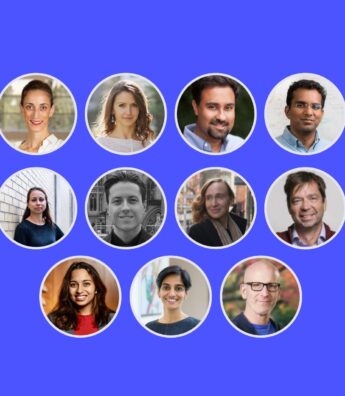
The workshop will feature expert speakers from the Kempner, Google Brain, Cold Spring Harbor, Meta FAIR, MIND Institute, Harvard, Stanford, NYU, Carnegie Mellon, and Hebrew University.
Abstracts
Abstract submissions for this workshop are now closed.
Location
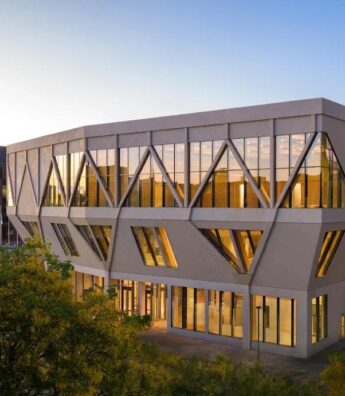
David Rubenstein Treehouse at Harvard University
Conveniently located at 20 Western Avenue, directly across from Harvard Business School and a short distance from the Science and Engineering Complex.
Please reach out to kempnerinstitute@harvard.edu with any questions about this event