

Kempner Institute Announces 2026 Accelerator Award Recipients
Harvard faculty members Nada Amin and Debora Marks selected for pilot grant program supporting advanced computational research in intelligence

Harvard faculty members Debora Marks (left) and Nada Amin (right) are recipients of the 2026 Kempner Institute Accelerator Awards.
The Kempner Institute for the Study of Natural and Artificial Intelligence at Harvard University is pleased to announce Nada Amin and Debora Marks as the recipients of the 2026 Kempner Institute Accelerator Awards, a new pilot grant program for Harvard faculty researching intelligence.
The accelerator awards program provides in-kind awards to Harvard faculty undertaking advanced computational research projects that are aligned with the Kempner’s mission, and that require computing resources at a scale that is otherwise unavailable to Harvard faculty. Accelerator award recipients pursue their projects using the Kempner AI Cluster, one of the largest and most powerful academic AI clusters in the world.
The 2026 awardees will begin their research using the Kempner AI Cluster in February 2026.
About the awardees and their projects
Nada Amin, who is Assistant Professor of Computer Science at Harvard’s School of Engineering and Applied Science (SEAS), and her team will use the award to scale-up and improve the success of DafnySynth, a computational model that writes, proves, and repairs software under strict mathematical constraints. The results of this research have implications for understanding the nature of intelligence in artificial systems, as well as creating practical infrastructure for safer AI.
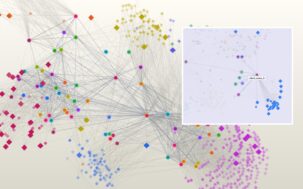
Debora Marks, who is Professor of Systems Biology at Harvard Medical School, and co-applicant Noor Youssef, who is Scientific Lead of Predictive Modeling in the Marks lab, will use the accelerator award to build a next-generation protein language model for predicting the evolution of viruses. This project aims to overcome failures in current AI systems, which struggle with sparse, highly divergent viral data, limiting their reliability. In addition to advancing the architecture of protein language models themselves, this project has implications for early identification of high-risk viral strains, forecasting of viral evolution, and design of vaccines and therapeutics for viral pathogens.
About the Kempner
The Kempner Institute seeks to understand the basis of intelligence in natural and artificial systems by recruiting and training future generations of researchers to study intelligence from biological, cognitive, engineering, and computational perspectives. Its bold premise is that the fields of natural and artificial intelligence are intimately interconnected; the next generation of artificial intelligence (AI) will require the same principles that our brains use for fast, flexible natural reasoning, and understanding how our brains compute and reason can be elucidated by theories developed for AI. Join theKempner mailing list to learn more, and to receive updates and news.