



Kempner Research in Artificial & Natural Intelligence for Undergraduates with Mentorship (KRANIUM)
A 10-week summer program for Harvard undergraduates undertaking research related to intelligence.

Overview
The Kempner Research in Artificial & Natural Intelligence for Undergraduates with Mentorship (KRANIUM) is a 10-week summer program sponsored by the Kempner Institute as part of the Harvard Summer Undergraduate Research Village (HSURV). KRANIUM provides a formative and substantive research experience for — and build community among — a small cohort of Harvard College undergraduates interested in the study of intelligence.
KRANIUM runs from early June to mid-August. Fellows live in one of the Harvard College houses with other fellows in the Summer Undergraduate Research Village. As part of KRANIUM, fellows participate in rich programming, including both social and academic activities, and become members of a vibrant intellectual and social summer community.
Identify a Research Project
Prior to applying to KRANIUM, students must identify a project with a Kempner-affiliated faculty mentor. To learn more about potential research projects with Kempner-affiliated mentors, visit our Research Opportunity Bulletin Board or reach out to faculty members or affiliate faculty members directly.
The KRANIUM Experience
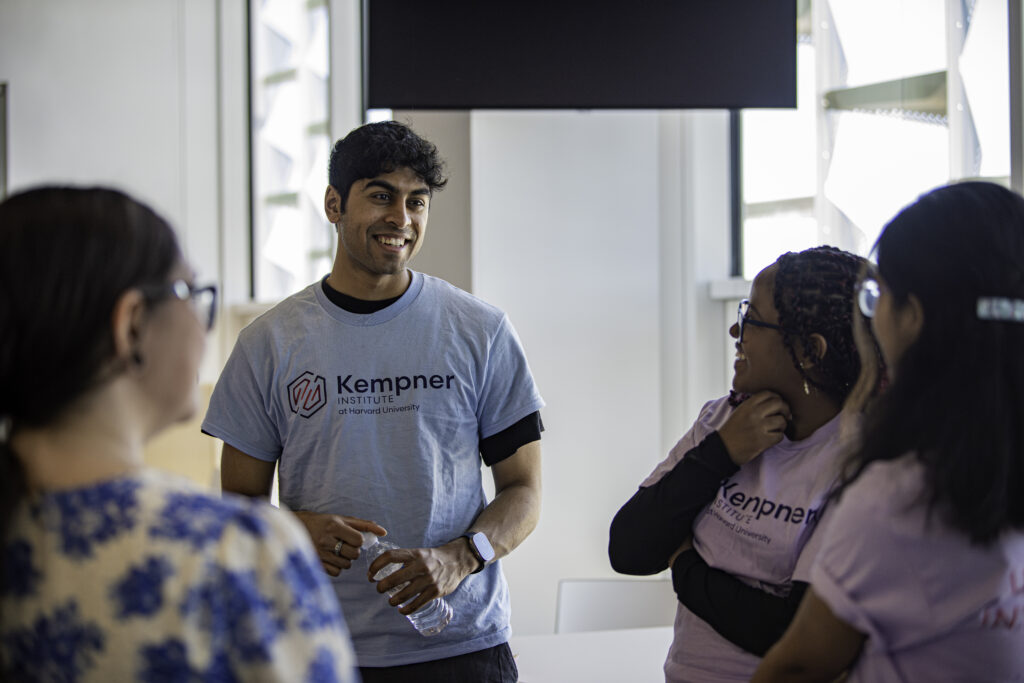
KRANIUM fellows are expected to fully participate and contribute to the community of scholars through workshops and evening enrichment activities throughout the program term. KRANIUM consists of the following components:
- Research Experience: KRANIUM fellows undertake a substantive research project under the guidance of a Kempner-affiliated faculty member.
- Residential Life and Community: KRANIUM fellows live together in a Harvard College residential house, along with fellows in the other Harvard Summer Undergraduate Research Village programs.
- Dining: Essential dining services are available to KRANIUM fellows. Weekday evening meal service, sometimes in conjunction with evening activities, as well as a weekday breakfast cart, are available.
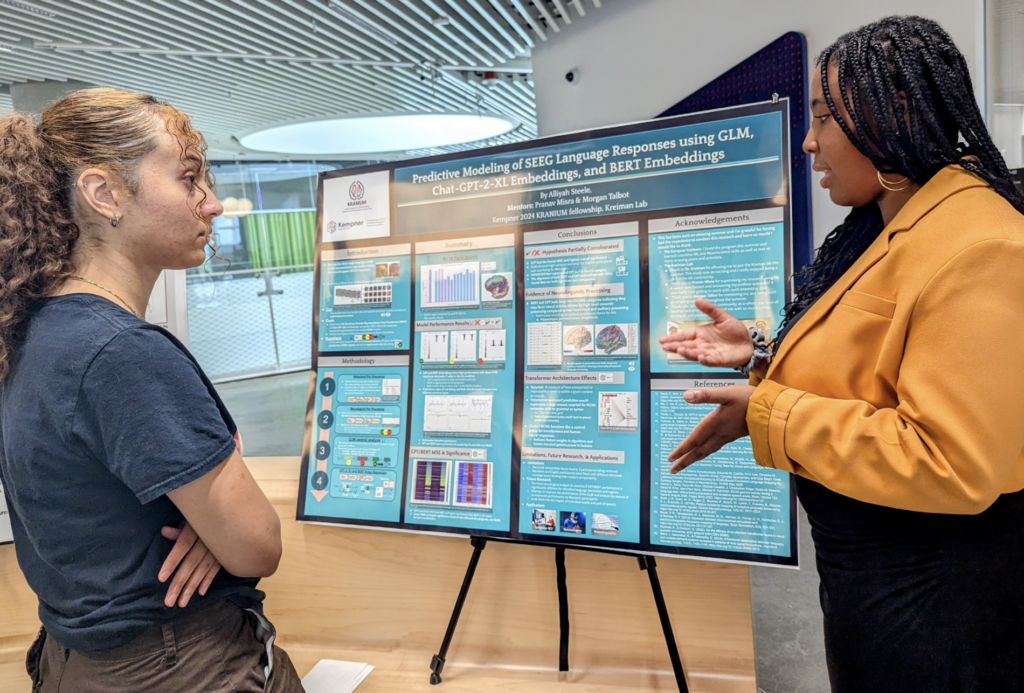
- Special Events and Academic Programming: Fellows attend KRANIUM-specific sessions designed to augment their knowledge around research in intelligence, including workshops on computational skills and conversations with faculty. KRANIUM fellows are encouraged to attend a Harvard Summer Undergraduate Research Village evening program series featuring prominent scientists in the Harvard community and the Boston area. Research Village-wide workshops on topics such as research ethics, poster presentations, and postgraduate career opportunities are offered throughout the program. In addition, Fellows have the opportunity to practice speaking about their research in both small and large groups throughout the summer.
- Recreational and Social Programs: KRANIUM Fellows are eligible to register for free use of Harvard athletic facilities, including the Malkin Athletic Center, Hemenway Gymnasium, and Blodgett Pool. A calendar of Research Village activities includes a range of opportunities to socialize and take advantage of Boston’s cultural and recreational summer offerings with your colleagues, including a variety of excursions and Fellow-initiated community events.
Benefits
KRANIUM offers a variety of benefits to ensure a successful summer research experience and enable fellows to form a close-knit community:
- A living stipend of $3,000 for the 10-week program
- Free lodging in designated Harvard housing
- A boarding/dining plan
Eligibility
- Any continuing Harvard College undergraduate student in good standing. Preference will be given to individuals who have not yet participated in a Summer Research Village Program (e.g.,PRISE, BLISS, PRIMO, SHARP, SURGH, or SPUDS).
- Must be able to commit 10 weeks* to summer research on campus.
- Must have a research mentor who is a co-director, investigator, associate faculty member, affiliate faculty member, or experienced research fellow at the Kempner Institute.
- Pursuing research related to one or more of the following areas:
- Foundations of intelligence, including mathematical and computational models of intelligence, cognitive theories of intelligence, and the neurobiological basis of intelligence.
- Research and development of new AI or ML methodologies or models from an engineering perspective, as well as scientific studies focused on understanding deep learning. This includes the development of novel applications of artificial intelligence, covering areas such as LLMs, generative AI models, computational biology, and the analysis of high-dimensional neural and behavioral data.
- May accept funding for only one Harvard-funded summer experience, per the Harvard College Summer Funding Policy.
- Students may be funded for no more than three total terms by Kempner Institute undergraduate programs (KURE and KRANIUM), where a term is fall semester, spring semester, or summer.
*NOTE: Individuals taking summer school courses, preparing for the summer MCAT exam or other summer graduate school entrance exams, or engaging in full-time public service projects are not eligible to participate in KRANIUM.
Selection Criteria
Since the primary purpose of the Program is to build and foster a strong and diverse community of science scholars, a successful application will demonstrate the following:
- A strong dedication to developing or furthering academic interest and excellence in research related to intelligence.
- A documented and verified opportunity to participate in an active research experience with a Kempner-affiliated faculty member that fulfills a compelling and specific academic goal over the summer.
- The ability and desire to participate actively and enthusiastically in a diverse residential community of scholars.
- An academic record demonstrating success in coursework that develops theoretical knowledge and/or practical application of the study of natural and/or artificial intelligence.
Evaluation of the applicant will be based on how well and how effectively the components of the application define and address these qualities and requirements.
Application process
Applications for Summer 2026 are now closed. Applications for Summer 2027 will open in December. To receive email updates about Kempner Institute undergraduate programs, please sign up for our undergraduate mailing list.
Required application materials:
- Application Form in CARAT
- Current Resume (max 1 page): Indicate significant activities, achievements, and experiences in college that demonstrate your interests and potential achievements.
- Current Unofficial Transcript: Download your unofficial transcript from my.harvard.edu, including your fall course grades and spring course listing.
- Essay Responses: In a separate document, please provide responses to the following three statements. Please be sure to include your name at the top of the page(s).
- Briefly describe the research interest(s) you would like to pursue this summer and why. This essay should convince a committee of scientists in different fields that you have thought carefully about the science yourself and are not simply rewording material from Wikipedia or a lab web page. Please be as specific as possible, but describe the research in your own words. If you must use jargon, give your own descriptions of the technical terms you use. (500 words maximum.)
- Describe how you expect that participating in KRANIUM will inform your academic trajectory or contribute to your professional goals. (300 words maximum.)
- Describe how you will contribute to and benefit from participating in a diverse residential community of researchers. Please provide descriptions of your involvement in your Harvard house or dorm (or other communities, such as a club or team or volunteer program), with specific examples of your role in contributing to the cohesion and distinctive identity of the group. (500 words maximum.)
- Evaluation Form: One evaluation form is required in lieu of a traditional recommendation letter. Send your recommender the Evaluation Form, which will guide them on the topics we would like addressed in their evaluation. Your evaluation form should be completed by someone in the Harvard academic/research community who can comment on your academic initiative and interest in pursuing excellence. You should not have an undergraduate student as your recommender even if they were your TF. This form may include brief examples of how you will benefit from KRANIUM. If your academic evaluator is also your summer faculty research host, they should also confirm their mentorship in that form; in this case, the evaluation form will also count as a letter of support, and therefore you do not need a separate confirmation letter. First-year students may consider a high-school academic/research evaluator. Applicants do NOT need to seek a residential letter of recommendation.
- Confirmation Letter from Kempner-affiliated faculty mentor (separate from Evaluation Form): A letter from your designated Kempner-affiliated faculty mentor should provide details about the proposed project, as well as to what extent and by whom you will be mentored. The applicant may upload this to CARAT directly, or the faculty host may email it to kempnereducation@harvard.edu. If your faculty host is also your academic evaluator, your faculty host should confirm their mentorship in their evaluation form, which they will upload directly to CARAT on your behalf after you indicate them in the Recommendations section.
Questions?
Please email us at kempnereducation@harvard.edu with any questions about Kempner undergraduate research programs. To receive updates about Kempner undergraduate programs, sign up for our undergraduate mailing list.