What Can Principles of Evolution Teach AI Scientists?
Kempner Institute three-day workshop brought together 250 scientists and students to investigate the science and evolution behind learning in biological and artificial systems
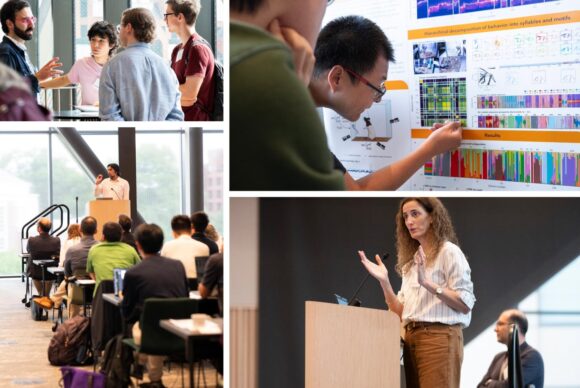
Through presentations, lightning talks, and a busy poster session, the workshop, titled “Learning Dynamics in Natural and Artificial Intelligence,” explored the fundamental mechanisms of learning, adaptation and intelligence in biological and artificial systems.
Photos: Anna Olivella
Allston, MA — State-of-the-art AI systems can make connections across vast amounts of data and are increasingly capable of tackling some of the most complex problems of our time. Yet biological intelligence still has some remarkable advantages. Shaped by evolution, biological systems can learn from limited experience, adapt easily to new situations, and do so using very little energy, capabilities that remain elusive for modern AI systems.
These differences raise critical questions for biologists, neuroscientists, and AI researchers: What drives learning and adaptation in biological and artificial systems? How has evolution shaped intelligence? How can insights from AI help us understand learning in biology? And how can we draw on the advantages found in biological learning to build the next generation of AI?
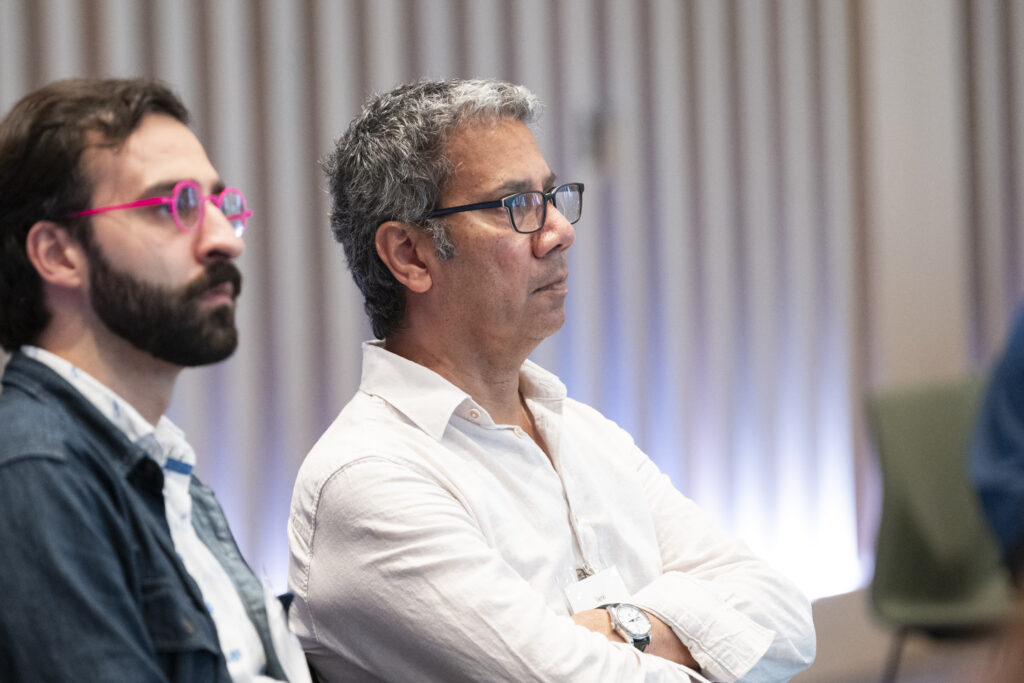
These questions were at the heart of a three-day workshop hosted by the Kempner Institute for the Study of Natural and Artificial Intelligence at Harvard last month, which brought together 250 scientists, researchers and students from academia and industry to explore the mechanisms that drive flexible, efficient learning across both natural and artificial systems.
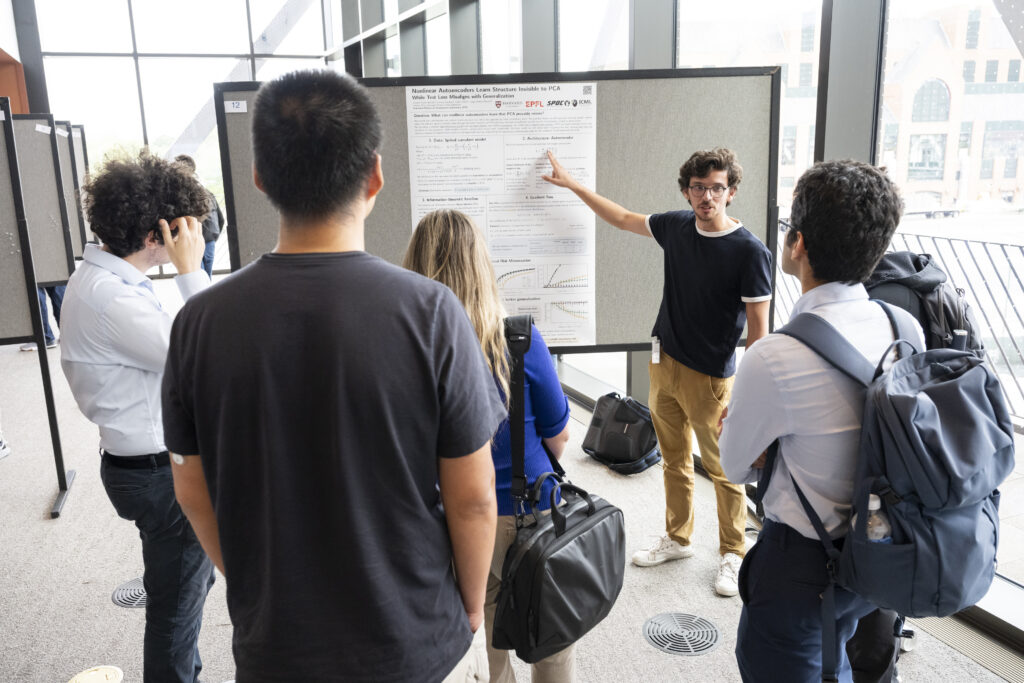
Through presentations, lightning talks, and a busy poster session, the workshop, titled “Learning Dynamics in Natural and Artificial Intelligence,” explored the fundamental mechanisms of learning, adaptation and intelligence in biological and artificial systems. Researchers examined how insights across these fields might allow for a deeper understanding of the brain, and how the remarkable versatility of biological intelligence might inform the future of AI systems, helping scientists build more robust computational models capable of adapting and generalizing to new challenges.
“Biological evolution is an important lens here because it offers an interesting foundation for learning in AI models,” said Kempner Research Projects Manager Janet Wallace, who helped organize the workshop. “Biological systems adapt rapidly to new situations with limited experience, and we are increasingly seeing this same capacity in artificial systems.”
At the workshop, researchers presented work on topics ranging from how humans acquire new motor skills when learning to walk to the evolutionary processes that gave dogs the ability to learn new behaviors, like herding or hunting, that are best suited for their environments. Other presentations explored how AI systems might learn through interaction with the world much like biological systems and the role of memorization in generalizing knowledge.
Together, presentations examined how insights from evolution and adaptation can help inform our understanding of learning, and offer new strategies for AI scientists building and training artificial neural networks – AI models inspired by the structure and function of the human brain.
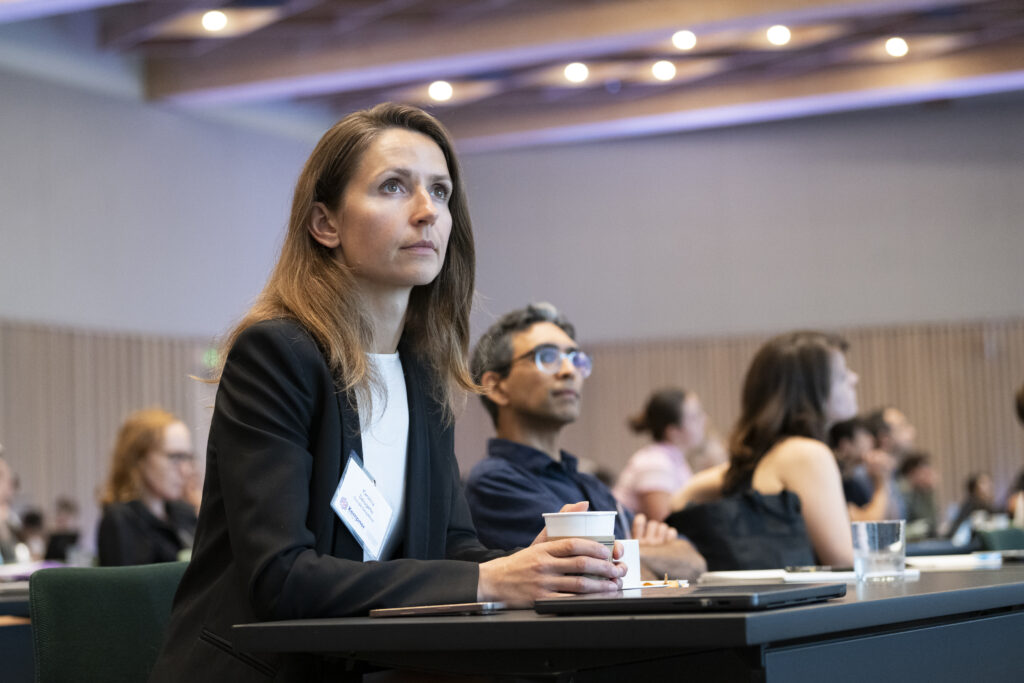
“For creating artificial networks, there are learning algorithms we could use that are inspired by evolution” said Kempner Research Fellow Bingbin Liu, who also helped organize the event. “And this can help us develop better neural networks, and improve them more efficiently over the course of training.”
Broadly organized around themes at the intersection of evolution, biological intelligence, and AI, the workshop considered how biological and artificial systems each achieve, or fail to achieve, efficiency, flexibility, robustness, and generalization. Researchers presented work highlighting complex aspects of behavior and cognition, including language, memory and decision-making in different biological systems, and how computational models can help explain these capabilities. They also discussed how capabilities from biological intelligence can inform and be integrated into new artificial systems.
“One of the big takeaways here is that we should be open to interdisciplinary discussions and ideas, such as how biology and evolution can help us optimize neural networks,” said Liu.
Watch the talks
Interested in learning more? Watch video presentations from the workshop “Learning Dynamics in Natural and Artificial Intelligence” from experts in academia and industry.
About the Kempner
The Kempner Institute seeks to understand the basis of intelligence in natural and artificial systems by recruiting and training future generations of researchers to study intelligence from biological, cognitive, engineering, and computational perspectives. Its bold premise is that the fields of natural and artificial intelligence are intimately interconnected; the next generation of artificial intelligence (AI) will require the same principles that our brains use for fast, flexible natural reasoning, and understanding how our brains compute and reason can be elucidated by theories developed for AI. Join the Kempner mailing list to learn more, and to receive updates and news.